Blog
Monoammonium Glycyrrhizinate Side Effects: The Licorice Line
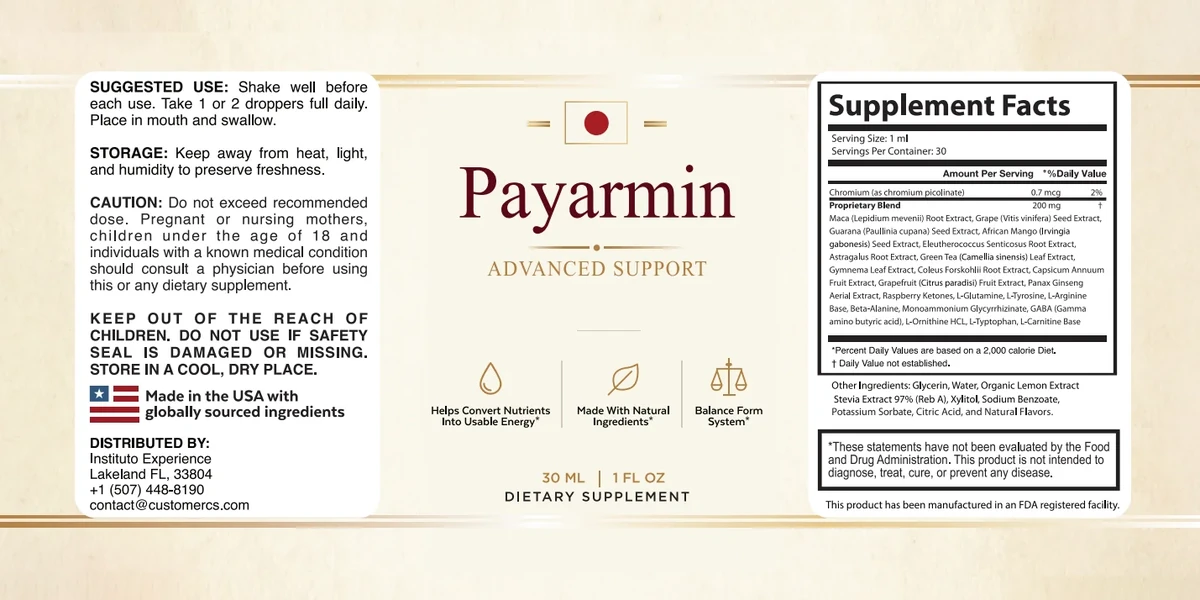
Monoammonium glycyrrhizinate side effects are tied to glycyrrhizin, the licorice compound. NCCIH says glycyrrhizin can cause serious effects such as irregular heartbeat in large amounts or long-term use. Payarmin lists it 18th of 22 in its 200 mg blend, and the amount is not printed.
Written by the Payarmin label deskUpdated · 4 min read
What it is01
What is monoammonium glycyrrhizinate?
Monoammonium glycyrrhizinate is a licorice-derived compound that appears on the Payarmin label.
It is the 18th of 22 blend ingredients. Blend items are listed by weight, heaviest first (eCFR, 21 CFR 101.36). So it holds at most 200 mg divided by 18 per 1 mL serving, which is about 11 mg. That is a ceiling from label order, not a lab result.
The real amount could be far smaller. The Supplement Facts page shows the full panel.
What NCCIH says02
What side effects does glycyrrhizin cause?
NCCIH says glycyrrhizin can cause serious effects, such as irregular heartbeat and cardiac arrest, especially in large amounts or over a long time (NCCIH, Licorice root).
The same page points to higher risk for people with high blood pressure, heart conditions or kidney conditions. It also notes that licorice products without glycyrrhizin might be safe for up to four months (NCCIH, Licorice root).
| Topic | What the page says |
|---|---|
| Heart rhythm | Irregular heartbeat and cardiac arrest possible in large or long-term use |
| Higher-risk groups | High blood pressure, heart or kidney conditions |
| Medicines | Interactions with corticosteroids reported; check with a provider about any medicine |
| Pregnancy | Large oral amounts (about 250 grams of licorice a week) linked to delivery before 38 weeks |
| Breastfeeding | Little is known |
| Blood pressure and potassium | Not stated in those words on the page we read |
That last row matters. Many articles link licorice to blood pressure and potassium. We did not find a source in our list that says it, so we do not state it as fact.
Worked example03
Does the Payarmin amount reach a level of concern?
We cannot tell, and the NCCIH page gives no milligram cutoff to compare against.
Ceiling per mL
200 mg divided by 18 is about 11 mg at most.
Droppers
The label says 1 or 2 droppers daily and prints no dropper volume. If a dropper held 1 mL, 2 droppers would be at most about 22 mg a day. That is our assumption.
The gap
"Large" is not defined in milligrams by the source, so the ceiling alone proves nothing either way.
Payarmin: from $49 a bottle30 mL drops · 2, 3 or 6 bottles · free shipping on 3 or 6 · 60-day guarantee
See packsWho should ask first04
Who should ask a clinician about this ingredient?
Ask first if you have high blood pressure, a heart or kidney condition, or take corticosteroids.
- You are pregnant or nursing.
- You already eat or drink licorice products often.
- You take any prescription. Keep taking prescribed medicine, and bring the label.
The side effects page covers the other cautions, and the ingredient list shows where this line sits among all 23.
FAQ05
Licorice compound questions
Is monoammonium glycyrrhizinate the same as licorice candy?
Not exactly. It is a compound made from licorice root, while candy mixes licorice with sugar and flavor. NCCIH's caution is about glycyrrhizin in licorice products (NCCIH, Licorice root). The label does not tell us how much is in the drops.
Does the label say how much monoammonium glycyrrhizinate is inside?
No. It is one of 22 ingredients sharing 200 mg, and single amounts are not required (eCFR, 21 CFR 101.36). By label order it holds about 11 mg at most per mL. That is a ceiling, not a measured value.
Is there a safe amount of glycyrrhizin?
The NCCIH page we read gives no safe milligram amount. It says serious effects are most likely in large amounts or long-term use (NCCIH, Licorice root). A clinician can weigh that against your health history.
Are licorice and potassium linked?
Some sources say so, but the NCCIH page we read does not state it, so we do not claim it (NCCIH, Licorice root). If you take a diuretic or a heart medicine, ask your pharmacist.
Who wrote this06
Written and reviewed by
Pages built from the label, the sales page and linked NIH, FDA, CDC, FTC and peer-reviewed sources.
Last updated . Read our editorial standards and how we check reviews. This website is run by Gopayarmin, a Payarmin U.S. shop, not by the manufacturer or the distributor. We earn money when you buy through our order links.
Keep reading
More about Payarmin
Payarmin U.S. shop
Ready to try Payarmin?
Check your medicines first, then pick a pack. Three or six bottles ship free and cost less per bottle, and every pack carries the 60-day results-or-refund guarantee.
- Order on the sales page checkout
- 60-day results-or-refund guarantee
- Ships from the U.S.