Guides
Blood Sugar Guides: Plain-Language Reads Beyond the Bottle
Blood sugar guides are short, sourced explainers on glucose, insulin, daily habits and supplement safety. This set sits beside the Payarmin label pages. Each guide uses US public health sources, says what is known and unknown, and never promises that a supplement lowers blood sugar or replaces medicine.
Written by the Payarmin label deskUpdated
Start here01
What are the Payarmin blood sugar guides?
They are plain-language guides to the ideas behind the bottle: glucose, insulin, habits, cravings and the safety of supplements.
The product pages on this site read the Payarmin label line by line. The guides step back. They explain the body topics that supplement ads lean on, so you can judge any label, including this one.
Every guide names its sources, such as NIDDK, CDC, NCCIH and the American Diabetes Association. Where the evidence is thin, the guide says so. Payarmin is a dietary supplement, not a diabetes medicine, and no guide here treats it as one.
| Guide | Question it answers |
|---|---|
| Blood sugar basics | What is glucose, and how does the body handle it? |
| Insulin resistance explained | What does it mean when cells respond poorly to insulin? |
| Supplements and diabetes medicines | What should I tell my pharmacist before I add a supplement? |
| Blood sugar habits | Which daily habits have public health support? |
| Sugar cravings and energy | Why do I crave sugar, and why does energy dip? |
| Comparing blood sugar supplements | How do I compare labels fairly? |
Reading order02
Where should I start if I am new to blood sugar supplements?
Start with blood sugar basics, then read the guide on supplements and diabetes medicines. Those two cover what most buyers need first.
The basics guide gives you the vocabulary: glucose, insulin, A1C, highs and lows. The medicines guide covers who should ask a pharmacist before taking anything new. After that, pick by interest.
Learn the words
Read blood sugar basics so that A1C and insulin make sense.
Check the safety side
Read supplements and diabetes medicines before you add any bottle.
Pick your topic
Habits, cravings or insulin resistance, depending on what you want to understand.
Read the label last
Then compare any product, including Payarmin, against what you learned.
By topic03
Which guide explains insulin resistance, and which covers daily habits?
The insulin resistance guide explains what the term means. The habits guide covers sleep, movement and meals.
The two work as a pair. One describes the problem in plain words. The other lists the everyday steps that US public health sources back, such as at least 150 minutes of moderate activity a week (CDC, Adult physical activity) and enough sleep (NIDDK, Insulin resistance and prediabetes).
Insulin resistance explained
Cells in muscle, fat and liver stop answering insulin well. Most people have no symptoms (NIDDK, Insulin resistance and prediabetes). The guide covers causes, risk factors and tests.
Blood sugar habits
The Diabetes Prevention Program found that lifestyle change cut the risk of type 2 diabetes by 58 percent over about three years (NIDDK, Diabetes Prevention Program). The guide shows what that means day to day.
Cravings and energy dips have their own guide, sugar cravings and energy. It looks at sleep, meals and stress before it looks at any bottle.
Safety04
Is there a guide on supplements and diabetes medicines?
Yes. It explains why supplements can interact with diabetes drugs, and what to ask your pharmacist.
NCCIH says supplements can interact with your medicines, and that you should tell every provider what you take (NCCIH, Using supplements wisely). The ADA adds that interactions can lead to low or high blood sugar (ADA, Vitamins and supplements). The guide turns that advice into a short list of questions.
Never stop or change a diabetes medicine because of a supplement or a guide. A reading under 70 mg/dL needs prompt care (NIDDK, Low blood glucose). A faint or confused person needs 911.
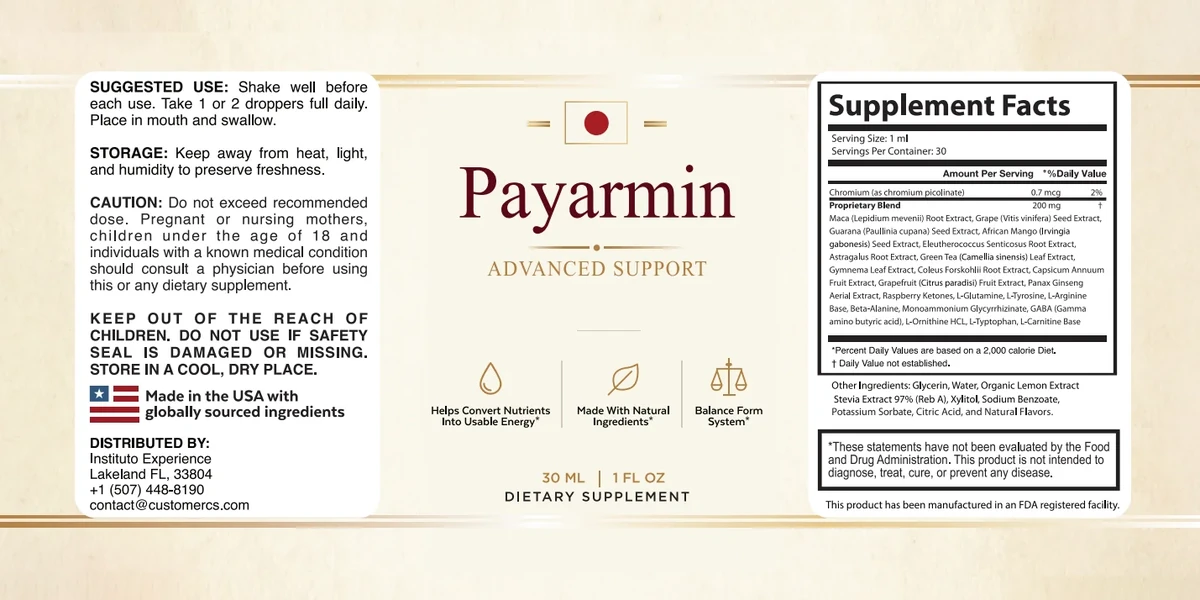
Payarmin is one example in that guide. Its blend includes chromium, gymnema, green tea and ginseng, and the guide explains why a pharmacist should see the whole list. The label also names guarana and a licorice compound. Read the full guide before you order anything.
Payarmin: from $49 a bottle30 mL drops · 2, 3 or 6 bottles · free shipping on 3 or 6 · 60-day guarantee
See packsHow we write05
How are the guides written, and are they different from blog posts?
The guides are written by the Payarmin label desk from public sources, and they stay put. Blog posts go deeper on single topics.
A guide is a stable explainer. It is updated when its sources change and shows a last-updated date. A blog post is a narrower article, such as one ingredient or one question. The blog is where those live.
Our rules are on the editorial standards page. In short:
- Health claims need a named source. Where we find none, we say so.
- We never write that a supplement lowers, balances or controls blood sugar.
- We do not name a medical reviewer until one has actually reviewed the page.
- We earn money from order links, and we say so on every page.
Scope06
Are the guides written for a US audience?
Yes. They use US units, US reference ranges and US health sources.
Blood sugar is in mg/dL, not mmol/L. Ranges come from the CDC and NIDDK (NIDDK, Insulin resistance and prediabetes) (CDC, A1C test). Supplement rules follow the FDA, which does not approve supplements before they are sold (FDA, Dietary supplements Q and A). If you live elsewhere, your units and rules may differ, so ask your own clinician.
Guides explain. They do not diagnose. If you have new thirst, fast weight change or readings that worry you, see a clinician.
| Guides | Body topics, habits and supplement safety, from public sources |
|---|---|
| Product pages | Payarmin's label, price, directions and guarantee |
| Blog | Narrow, single-question articles |
Back to the bottle07
What do the guides say about Payarmin itself?
Payarmin is a dietary supplement in liquid drops. The guides treat it as a label to read, not a treatment.
The label lists chromium at 0.7 mcg and a 200 mg proprietary blend of 22 ingredients. Single amounts are hidden, and the average is about 9 mg per ingredient in each 1 mL serving. No trial has tested the product. The front claims "Helps Convert Nutrients Into Usable Energy*", and the FDA has not evaluated it (FDA, Structure/function claims).
When you are ready to look at the bottle, start with the supplement facts or the how it works page.
FAQ08
Blood sugar guide questions
Where should I start if I am new to blood sugar supplements?
Start with the blood sugar basics guide, then read supplements and diabetes medicines. The first gives you the vocabulary, such as glucose, insulin and A1C. The second covers who should ask a pharmacist before adding anything new.
Which guide explains insulin resistance?
The insulin resistance explained guide. It says what the term means, who is at higher risk and how doctors check for it. NIDDK notes that most people with insulin resistance have no symptoms (NIDDK, Insulin resistance and prediabetes), so testing matters more than guessing.
Is there a guide on supplements and diabetes medicines?
Yes. It explains why some supplements can interact with diabetes drugs and lists questions for your pharmacist. It tells readers to keep taking prescribed medicine and never to change a dose because of a supplement.
Which guide covers daily habits?
The blood sugar habits guide covers movement, sleep, meals and weight. It leans on the CDC's 150 minutes of weekly activity (CDC, Adult physical activity) and the Diabetes Prevention Program (NIDDK, Diabetes Prevention Program), not on any product.
How are guides different from blog posts here?
A guide is a stable explainer on a broad topic and carries a last-updated date. A blog post is a narrower article on one question or ingredient. Both follow the same editorial rules and cite their sources.
Are the guides written for a US audience?
Yes. They use mg/dL, US reference ranges from the CDC and NIDDK, and FDA supplement rules. If you live outside the US, your units and rules may differ, so ask a local clinician.
Do the guides tell me whether Payarmin will work for me?
No. No trial has tested Payarmin, so nobody can promise a result. The guides explain how to read its label and how to judge claims. Your doctor or pharmacist can tell you whether it fits your medicines.
Who wrote this09
Written and reviewed by
Pages built from the label, the sales page and linked NIH, FDA, CDC, FTC and peer-reviewed sources.
Last updated . Read our editorial standards and how we check reviews. This website is run by Gopayarmin, a Payarmin U.S. shop, not by the manufacturer or the distributor. We earn money when you buy through our order links.
Keep reading
More about Payarmin
Payarmin U.S. shop
Ready to try Payarmin?
Check your medicines first, then pick a pack. Three or six bottles ship free and cost less per bottle, and every pack carries the 60-day results-or-refund guarantee.
- Order on the sales page checkout
- 60-day results-or-refund guarantee
- Ships from the U.S.